Sleek Fashion & Beauty Website Templates for Modern Frontend Developers
Frontend developers, UI engineers and digital agencies can deploy fashion and beauty website templates to production that are built with premium frontend frameworks including React, Next.js and Tailwind CSS, eliminating repetitive layout setup and development time to create high performing web platforms. Readers will discover the methodologies they can use to assess critical storefront code architectures, choose optimized design bases from a specialized code hub such as Themixly, and apply a checklist to launch client sites quickly and visually responsive.
Why Your Next Design Project Needs a Specialized Frontend Foundation
Building digital storefronts and portfolios in the highly visual style industry requires flawless pixel execution. A generic corporate layout rarely captures the luxury feel, smooth micro-interactions, or fast loading speeds that modern beauty consumers expect.
In this guide, you will learn the exact technical requirements that make a style template successful. We will break down key framework features, look closely at real-world project deployments, and explore how production-ready code structures streamline your entire client launch pipeline.
What Key Features Must a Premium Fashion Web Layout Include?
High-end clothing brands, cosmetic stores, and luxury salons rely heavily on striking visuals. When selecting a pre-built developer asset, standard structural components need to handle heavy asset loading without breaking the user experience.
1. High-Performance Product Grids and Dynamic Filtering
A standard blog layout is completely different from a dynamic retail storefront grid. Modern beauty templates require staggered layouts, clean image hover-states, and asynchronous filtering systems. This allows users to sort items by color, size, or price instantly without page refreshes.
2. Micro-Interactions and Premium Motion Design
The difference between a cheap layout and a premium digital experience lies in the subtle movements. Soft image transitions, magnetic add-to-cart animations, and smooth side-navigation drawers keep users engaged and lower bounce rates.
3. Comprehensive Performance Optimization
High-resolution lookbooks and video backgrounds easily slow down loading times if the underlying code is messy. Excellent Website templates incorporate modern code-splitting practices, lazy-loading for assets, and lightweight CSS utilities out of the box.
Which Core Tech Stacks Deliver the Best Performance?
Choosing the correct web architecture directly impacts your page response speed and scalability. Let’s look at how the main development stacks compare for visual-centric beauty platforms:
Framework / Tool | Ideal Use Case | Key Frontend Advantage | Speed Performance |
React & Next.js | Complex Ecommerce, Multi-page Portfolios | Server-side rendering (SSR), reusable UI components, clean data binding. | Fast |
Tailwind CSS | Custom Design Systems, Rapid Prototyping | Zero unused CSS bloat, direct utility classes, responsive breakpoints. | Faster |
WordPress | Client Hand-off, Content-Heavy Beauty Blogs | Easiest content management system (CMS), simple plugin ecosystems. | Average |
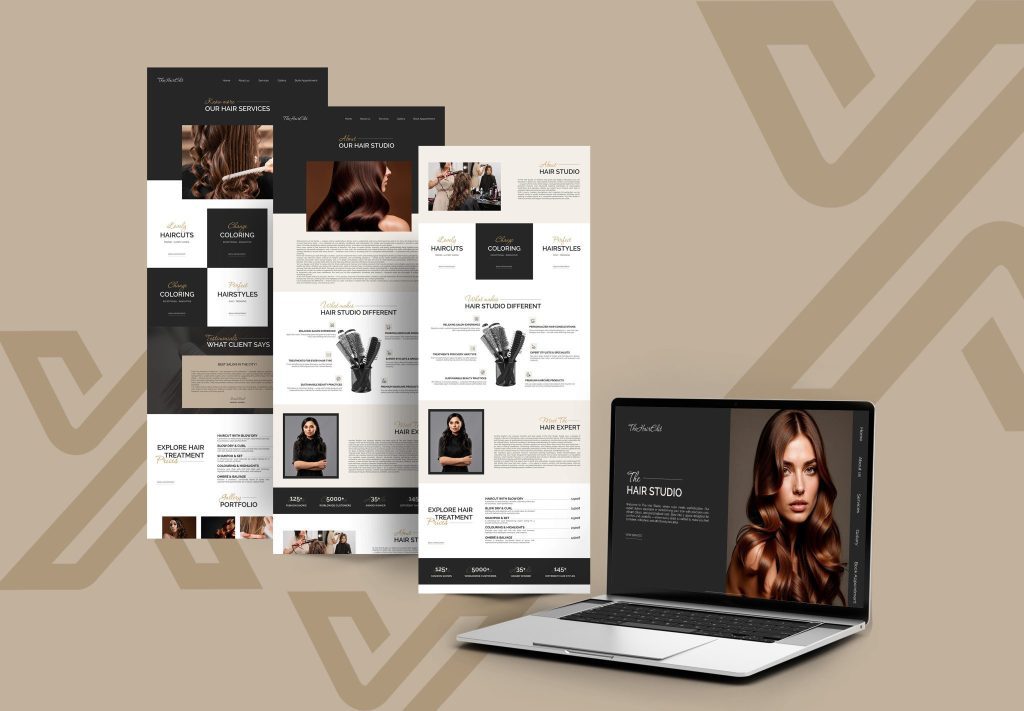
How to Step-by-Step Launch a Hair Salon Site Using "TheHairEdit" React Template
Let’s walk through a concrete development project. If you are building an online destination for a luxury hair studio or cosmetics vendor, using a purpose-built system like the premium TheHairEdit – React Hair Salon Website Template saves dozens of hours of layout design.
Here is the exact implementation path to go from a downloaded template file to a live staging URL:
1.Extract the Source Package and Open Code Editor:
Download the file package directly from the Themixly Fashion & Beauty Product Category. Extract the internal project folder and launch it directly in VS Code or your preferred IDE.
2.Install Core Project Dependencies Locally:
Open your integrated terminal panel and run the command npm install or yarn install. This automatically downloads all mandatory layout modules, UI styling engines, and reactive icons listed in the package configuration.
3.Customize Theme Colors and Local Asset Mapping:
Navigate into the primary configuration files. Swap out the default placeholder images in the asset folder for your custom client imagery, and adjust the brand colors inside your style settings to match the client’s guidelines.
4.Execute Local Testing Environment and Deploy:
Run the command npm run dev to preview the interface live. Once verified, run npm run build to output a highly optimized production package, ready to host on platforms like Vercel, Netlify, or AWS.
Developer Evaluation Checklist: Choosing the Perfect Layout
Before spending time or money on a premium template asset, check that your project package kinda actually lines up with these key design requirements:
- [ ] 100% Responsive Design: The layout shifts nicely between super wide desktop displays, and small mobile screens too.
- [ ] Clean Code Architecture: Component files should be arranged in a sensible way, so you don’t get tangled, deeply nested code blocks.
- [ ] Cross-Browser Verification: Layout pieces need to render right across Chrome, Safari, Firefox, and Edge.
- [ ] SEO-Ready Markup: Heading sequences keep a proper H1-H4 structure, and image tags should have neat alt text spaces too.
- [ ] Accessible Elements: Color choices must satisfy text contrast rules, and navigation should work smoothly using keyboard controls rather than only the mouse.
What Design Trends Are Dominating Modern Luxury Portfolios?
Modern luxury design leans heavily toward minimalism. Monochromatic dark themes mixed with massive typography accents make images stand out beautifully.
Instead of cluttering pages with flashy geometric decorations, focus on spacious layouts, off-center column distributions, and smart interactive states. Let the clothing lines, cosmetic palettes, or styling portfolios speak entirely for themselves.
FAQs Regarding Frontend Web Layouts
1. Why should I purchase a specialized template instead of a generic layout bundle?
Specialized web layouts come with pre-built components designed specifically for their industry. For instance, a dedicated beauty layout includes appointment calendars, product grids, and lookbooks. A generic corporate theme would require you to code these features from scratch.
2. Can I seamlessly convert a React-based design into an interactive Next.js application?
Yes. Because Next.js uses React as its core rendering engine, migrating UI views is highly straightforward. You only need to adjust the routing architecture from a single-page setup (like React Router) to the Next.js App Router structure and optimize your data-fetching methods.
3. Do premium frontend packages come with comprehensive backend database integration?
Most marketplace designs focus entirely on the frontend user interface. This means you receive fully styled pages, interactive UI states, and responsive styles. Connecting these components to a database like Shopify, Supabase, or a headless CMS is up to the developer.
4. How easily can I change the brand styling within a Tailwind CSS template?
Changing the look is incredibly simple. By updating the centralized configuration file (tailwind.config.js), you can change your entire color theme, font styles, and border styles across the whole application instantly.
5. What is the standard policy regarding template updates when framework versions change?
Top-tier developer networks regularly release updated code packages to ensure compatibility with major framework upgrades. Always check the developer’s license terms and support logs before buying.
Selecting and Launching Your Development Base
If you are ready to start building your client’s web presence, don’t start from an empty text editor. Begin by looking at your core business model requirements. For online boutiques, pick a layout optimized for payments and product variations. For service providers like studios or salons, focus on booking flows and gallery grids.
Explore premium, pre-built packages tailored for modern development ecosystems on the Themixly Marketplace. Pick your structured UI baseline, customize it to fit your brand identity, and launch your high-performance storefront today.