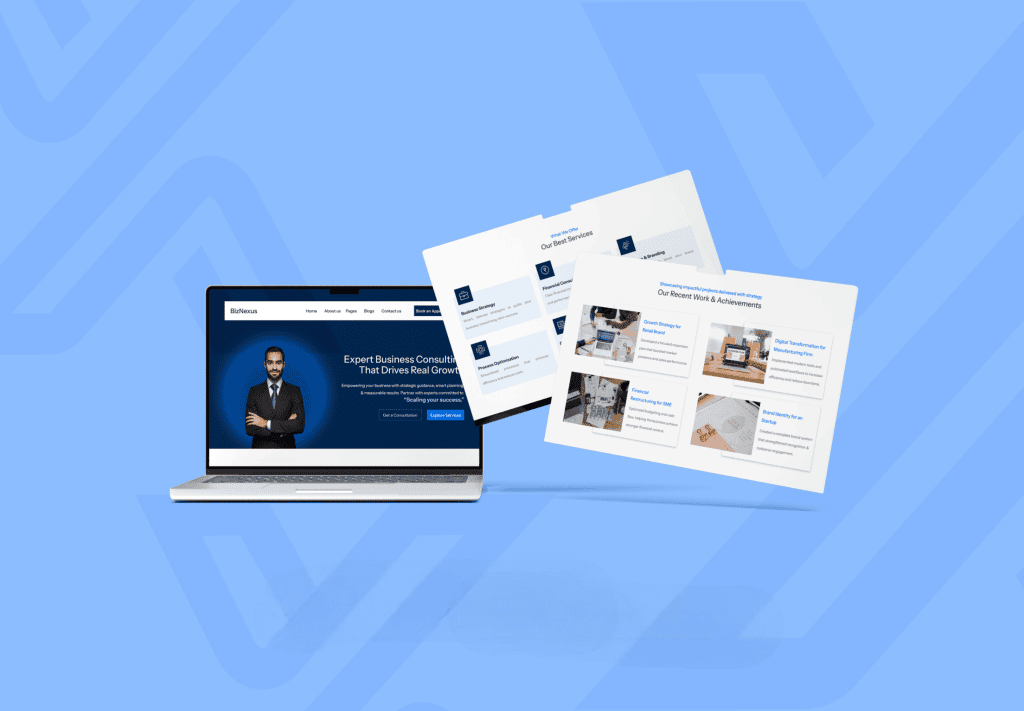
Why Premium Website Templates Are the Ultimate Cheat Code for Agencies in 2026
In 2026, premium website templates are the efficiency cheat code for digital agencies, providing code architectures that are ready to use and production-ready. Agencies are able to get projects launched weeks to days faster since the components are already responsive and optimized for speed, having been created using React, Next.js, or WordPress. This allows you to move away from repetitive coding and focus on valuable client strategy, custom features, and scaling agency profit margins.
What You Will Learn in This Guide
The traditional web agency model is coming to an end in 2026 because of the lack of speed to custom code each client project, which is negatively affecting profit margins. You never want to offer inflated enterprise budgets when your clients demand ultra-fast loading speeds, pristine mobile experiences and quick launches. Reinventing the wheel with building layout grids, responsive navigation menus and form validations is no longer a wise business move.
You will learn how some of the top agencies utilize pre-designed template collections from sites such as Themixly to increase productivity. We’ll review the nuts and bolts of the workflows, the financial considerations when using custom vs. template, what to expect from a 2026 template, and how to leverage pre-built foundations into your high ticket client workflows.
Why Is Building Websites From Scratch Hurting Agency Profitability?
The “code everything from scratch” rule was once considered a point of pride for web studios. Today, it is often a silent profit killer. When your engineering team spends 30 to 40 hours setting up basic layout structures, routing, and boilerplate state management, those hours eat directly into your gross margin.
The Core Efficiency Bottlenecks of Custom Development
- Repetitive Foundation Work: Developers waste billable time recreating standard UI patterns like responsive navbars, footer links, and contact forms.
- Extended QA Cycles: Custom code base setups require extensive cross-browser testing and mobile layout adjustments for every new build.
- Scope Creep & Delayed Launches: Longer production timelines increase the risk of client review delays, extending project delivery from 10 days to 10 weeks.
- Burnout on Low-Margin Work: Top-tier frontend talent gets fatigued doing repetitive layout work rather than complex functional integrations.
Custom Code vs. Premium Template Workflow: What Do the Numbers Say?
| Production Stage | Custom Build From Scratch | Premium Template Workflow (Themixly) | Efficiency Impact |
|---|---|---|---|
| UI Design & Wireframing | 25 – 40 Hours | 4 – 8 Hours (Customizing pre-built designs) | 80% Faster |
| Boilerplate Architecture | 20 – 35 Hours | 1 – 2 Hours (Cloning production repository) | 95% Faster |
| Responsive UI Styling | 30 – 50 Hours | 5 – 10 Hours (Tweaking Tailwind or CSS variables) | 80% Faster |
| API Integration & Logic | 15 – 25 Hours | 15 – 25 Hours (Focused core development) | 100% Focused on Value |
| Testing & Optimization | 15 – 20 Hours | 3 – 5 Hours (Built-in standard compliance) | 75% Faster |
| Total Turnaround Time | 105 – 170 Hours | 28 – 50 Hours | ~75% Total Time Reduction |
What Makes a 2026 Website Template "Production-Ready"?
Not all templates are created equal. Legacy marketplace themes often suffer from bloated scripts, outdated dependencies, and messy code structures. A true modern template framework acts as a clean, scalable starting foundation.
Modern Production Template Architecture
├── ⚡ React 19+ / Next.js / Clean WordPress
├── 🎨 Tailwind CSS / Modular Component Design
├── 🚀 Zero Script Bloat & High Lighthouse Scores
└── 📱 Mobile-First Responsive Layout Grids
1. Modern Framework Architecture
Modern stack templates, such as React 19+, Next.js, or light WordPress page builders, make sure to render quickly and remain fully scalable. Custom backend APIs can be added without refactoring the UI layer.
2. Clean, Documented Code bases
When an agency opens a template file, the component directory should follow intuitive naming conventions. Well-structured React JSX or clean PHP files allow any developer on your team to jump in and start customizing immediately.
3. Native Search Engine & Core Web Vitals Optimization
Fast loading speeds and structured semantic tags are key to search engine optimization by Google and other search engines. Premium frameworks also have light-weight CSS structures, optimized image dimensions and semantic HTML5 elements already configured. You can check performance scores, e.g. Google.PageSpeed Insights.
How Agencies Implement Templates Without Sacrificing Brand Uniqueness
A common concern among agencies is that using templates will result in “cookie-cutter” websites. However, high-end agency teams do not deliver raw templates; they use them as a design system.
A 4-Step Agency Customization Blueprint
- Establish Brand Token Sets: Change default brand variables (colors, typography sizes, border radius, shadow depth) in brand configuration files (tailwind.config.js). This instantly changes the look of the visual personality.
- Swap Content & Visual Assets: Integrate client images, user-specific iconography and brand messaging, that are specifically designed to meet the needs of the user.
- Reconfigure Layout Modules: Match components across subpages such as a portfolio module from a creative theme with a pricing module from a SaaS template.
- Integrate Custom Functionality: Integrate contact forms with client CRMs (HubSpot, Salesforce), install analytics tracking and configure custom CMS endpoints.
How Do Templates Drive AI Search Visibility & GEO Performance?
Generative Engine Optimization (GEO) and AI search engines analyze content structure, semantic clarity, and clean DOM trees when crawling sites. Premium templates built with semantic tags give your clients an immediate advantage in AI search indexing.
Checklist: Features That Help AI Engines Understand Your Website
- [x] Semantic HTML5 Tags: Proper use of <main>, <article>, <section>, <nav>, and <aside> wrappers.
- [x] Clear Heading Hierarchies: Strict $H1 \rightarrow H2 \rightarrow H3$ nesting without skipping levels.
- [x] Lightweight DOM Depth: minimal nesting of <div> tags, simplifying AI bots’ ability to extract text content.
- [x] Structured Data & Schema: Inbuilt support for Organization, FAQ, and Service schemas using structured data – JSON-LD.
- [x] Accessible ARIA Attributes: Pre-configured labels for navigation buttons, modal toggles and form elements.
You can access the official W3C Web Standards Documentation for an overview of current guidelines for developing semantic web components.
How to Select the Right Template Vendor for Your Agency
Choosing the wrong marketplace can lead to outdated plugins, security vulnerabilities, and abandoned code bases. Partner with established template platforms that maintain active update cycles.
Key Verification Questions to Ask Before Purchasing
- Is the stack future-proof? Ensure the product uses current technology standards (e.g., modern React release cycles or current WordPress core standards).
- Are updates included? Check if the developer provides bug fixes and ongoing template enhancements.
- Is the license flexible? Confirm that agency licensing permits commercial deployments across multiple client sites.
- Does it include industry-specific layouts? Look for targeted design patterns—such as law firms, healthcare, corporate consulting, or travel platforms—that fit your niche client roster.
Browse specialized options like Themixly’s Consultancy Templates or their curated TypeScript React Collection to match specific project requirements.
FAQs About Agency Website Templates
Will using website templates hurt my agency’s reputation?
No. High-ticket clients are concerned about results: quick load times, awesome looks, mobile responsive design, and conversion funnels. Premium production ready foundations enable you to offer higher design quality, faster turnarounds at competitive prices.
Can developers customize template code easily?
Yes you can, if you select developer friendly templates using clean coding standards, modular components and popular CSS frameworks such as Tailwind. Developer friendly architectures enable software engineers to introduce new logic without any entangled code base.
Are premium website templates good for SEO performance?
Yes. Quality templates built with clean HTML5 structures, fast load scripts, and mobile-first responsiveness provide a solid technical SEO baseline. Search engines prioritize sites that deliver smooth user experiences and quick page rendering.
What is the typical cost savings when using templates for client builds?
Agencies typically reduce initial setup and layout production costs by 70% to 80% per build. Instead of spending $3,000–$5,000 in developer hours on foundational coding, template starter licenses cost a fraction of that, significantly increasing project profit margins.
Stop wasting billable hours on custom code setups.
Upgrade your workflow with production-ready, SEO-optimized templates built for modern agency growth.